
Safety profile of ICLUSIG (ponatinib) in newly diagnosed Ph+ ALL
PhALLCON TRIAL DATA
Safety profile: In adults with newly diagnosed Ph+ ALL, ICLUSIG + chemotherapy had a comparable safety profile to imatinib + chemotherapy1
Most common adverse reactions ≥20% in the PhALLCON study1
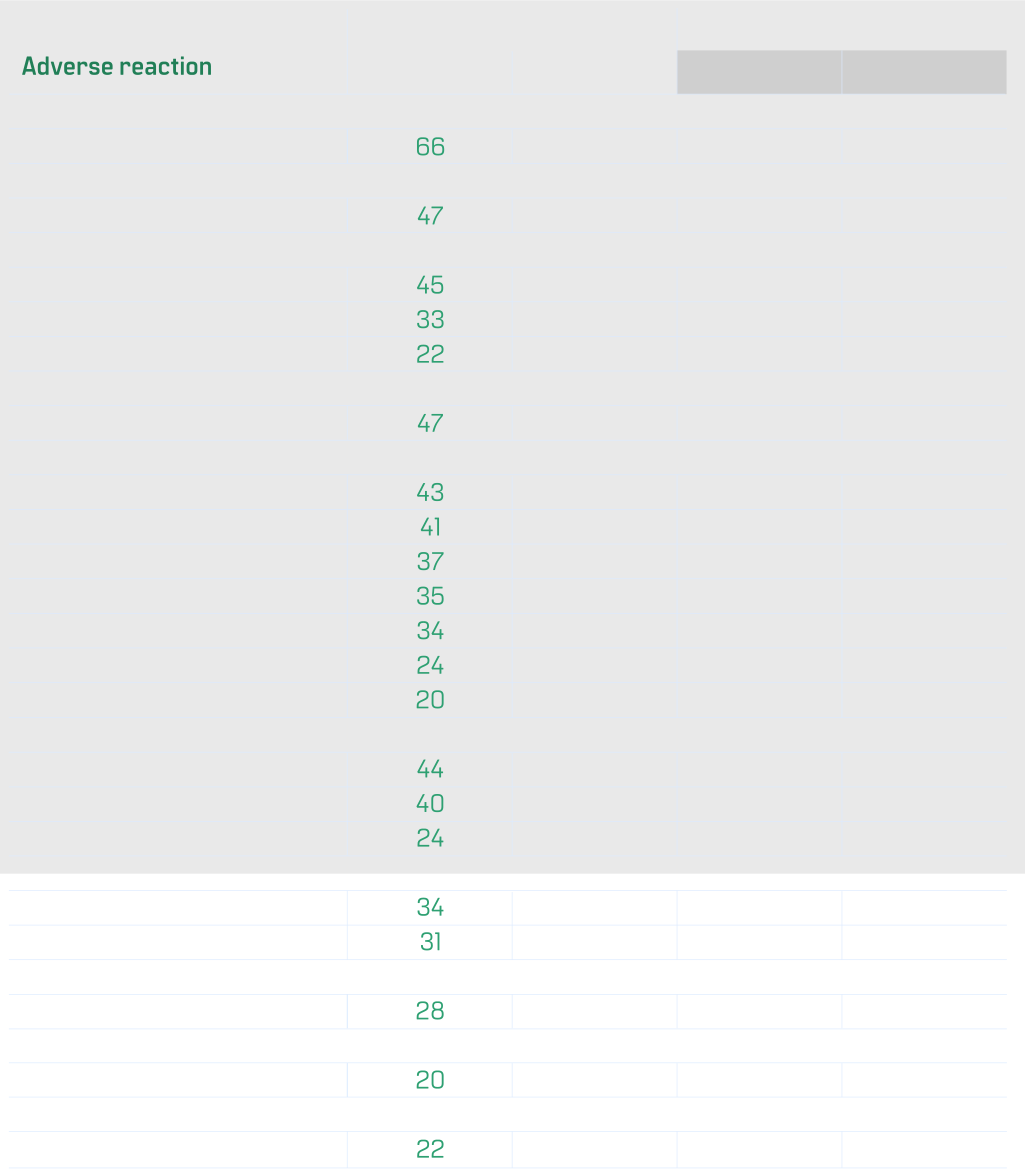
aGraded using CTCAE v5.0.1
b Includes arthralgia, arthritis, back pain, flank pain, intervertebral disc degeneration, joint swelling, osteoarthritis, pain, neck pain, pain in extremity, pain of skin, sciatica, spinal pain, tendonitis, and tenosynovitis.1
c Includes abdominal discomfort, abdominal distension, abdominal pain, abdominal pain lower, abdominal pain upper, chronic gastritis, colitis, enteritis, enterocolitis, gastric ulcer, gastritis, gastroenteritis, gastrointestinal pain, gastroesophageal reflux disease, and helicobacter gastritis.1 AR=adverse reaction; CTCAE=Common Terminology Criteria for Adverse Events; Ph+ ALL=Philadelphia chromosome-positive acute lymphoblastic leukemia.
Important safety information
ICLUSIG + chemotherapy safety profile in the PhALLCON study
Serious and fatal adverse reactions
- Serious adverse reactions occurred in 63% of ICLUSIG patients and 57% of imatinib patients1,2
- Serious adverse reactions (>2%) in ICLUSIG patients included febrile neutropenia (18%), pyrexia (6%), thrombocytopenia (4.3%), sepsis (3.7%), septic shock (3.7%), anemia (2.5%), hemorrhage (2.5%), neutropenia (2.5%), pancreatitis (2.5%), peripheral neuropathy (2.5%), pneumonia (2.5%), and acute kidney injury (2.5%)1
- Fatal adverse reactions occurred in 6% of patients in both arms (ICLUSIG: 9 patients; imatinib: 5 patients). These events included sepsis in 6 (3.7%) ICLUSIG patients and 2 (2.4%) imatinib patients, sudden death, pneumonitis, and respiratory failure in 1 (0.6%) ICLUSIG patient each, and pulmonary sepsis, depressed level of consciousness, and pseudomembranous colitis in 1 (1.2%) imatinib patient each. One fatal TEAE was considered treatment-related in the imatinib arm (depressed level of consciousness)1,2
Discontinuations
- Permanent discontinuation due to adverse reactions occurred in 13% of ICLUSIG patients. Adverse reactions resulting in permanent discontinuation in >2% of ICLUSIG patients included arterial occlusive events and sepsis1
Laboratory abnormalities
- The most common Grade 3 or 4 laboratory abnormalities (>20%) are decreased white blood cell count, decreased neutrophil cell count, decreased platelet count, decreased lymphocyte cell count, decreased hemoglobin, increased lipase, and increased ALT1
Clinically relevant
- Clinically relevant adverse reactions in ≤10% of ICLUSIG patients included urinary tract infection (10%), arterial occlusive events (6%), cardiac failure (6%), and acute kidney injury (4.3%)1
In PhALLCON, ICLUSIG demonstrated comparable safety outcomes with imatinib, including rates and severity of AOEs and VTEs1,2
- The rate of TE-VTEs was 11.7% in ICLUSIG patients vs 12.3% in imatinib patients2
- The rate of TE-AOEs was 2.5% in ICLUSIG patients vs 1.2% in imatinib patients2


