
Safety profile of
ICLUSIG (ponatinib) for Ph+ ALL
IN THE PACE TRIAL
PACE established the safety profile for ICLUSIG in patients with Philadelphia chromosome-positive acute lymphobastic leukemia1
Adverse Reactions (≥20%) in Patients with Ph+ ALL
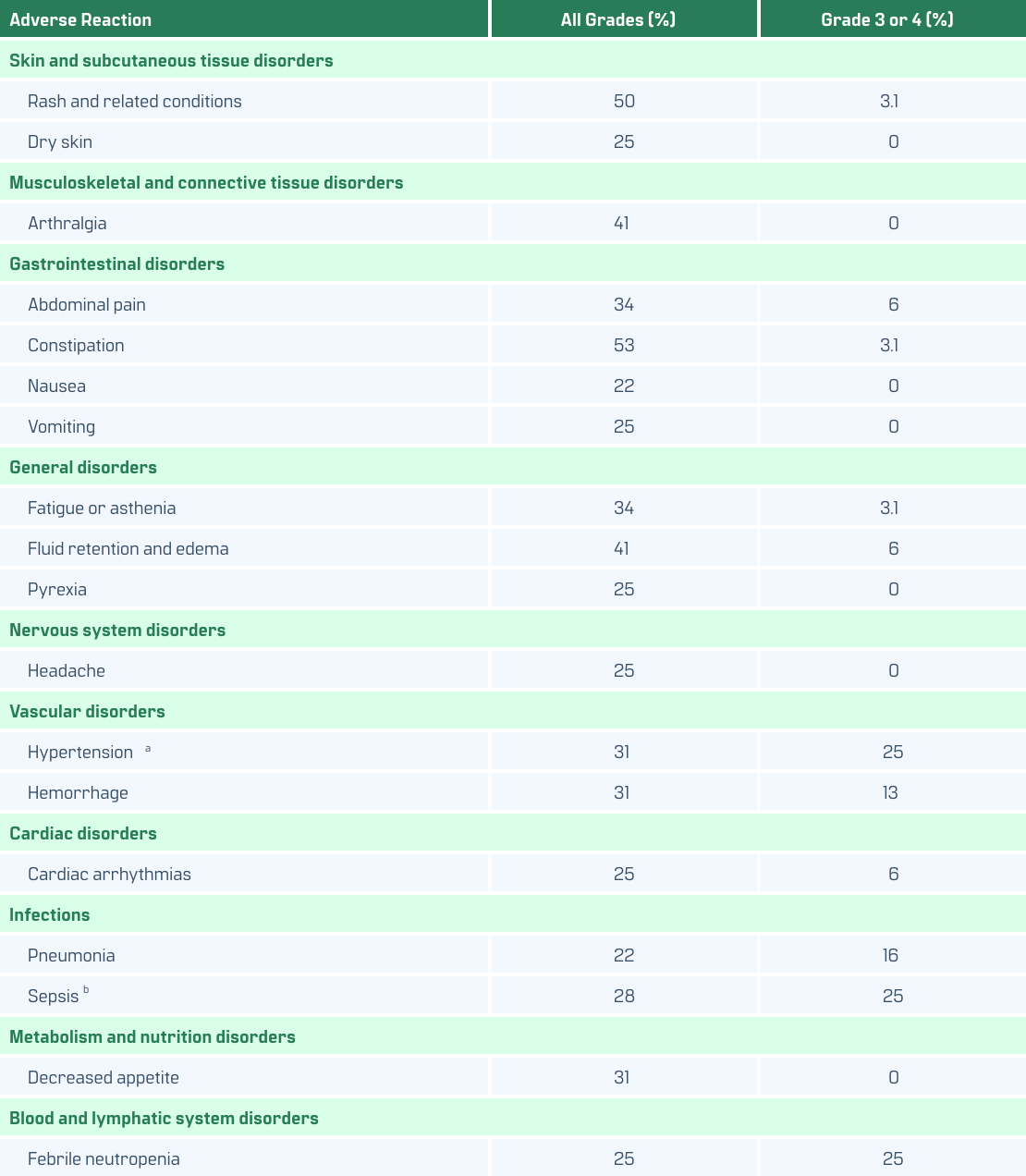
aDerived from blood pressure (BP) measurement.
bSepsis includes abdominal sepsis, bacteremia, device-related sepsis, escherichia bacteremia, fungemia, klebsiella bacteremia, klebsiella sepsis, neutropenic sepsis, sepsis, septic shock, staphylococcal bacteremia, staphylococcal sepsis, streptococcal bacteremia, and urosepsis. Graded using Common Terminology Criteria for Adverse Events (CTCAE) v4.03.
bSepsis includes abdominal sepsis, bacteremia, device-related sepsis, escherichia bacteremia, fungemia, klebsiella bacteremia, klebsiella sepsis, neutropenic sepsis, sepsis, septic shock, staphylococcal bacteremia, staphylococcal sepsis, streptococcal bacteremia, and urosepsis. Graded using Common Terminology Criteria for Adverse Events (CTCAE) v4.03.
Ponatinib Serious Adverse Reactions2
Serious adverse reactions occurred in 69% of patients who received ICLUSIG (N=449 [417 CML patients and 32 Ph+ ALL patients]). Serious adverse reactions in >2% of patients included:
- AOEs (20%)
- Pneumonia (10%)
- Cardiac arrhythmias (8%)
- Pancreatitis/lipase elevation (7%)
- Abdominal pain (6%)
- Cardiac failure (6%)
- Hemorrhage (6%)
- Secondary malignancies (5%)
- Sepsis (5%)
- VTEs (5%)
- Fluid retention and edema (4.5%)
- Pyrexia (4.5%)
- Anemia (3.3%)
- Hypertension (3.1%)
- Thrombocytopenia (3.1%)
- Febrile neutropenia (2.9%)
- Cellulitis (2.7%)
- Arthralgia (2.2%)
Fatal adverse reactions occurred in 9% of patients who received ICLUSIG; the most frequent fatal adverse reactions were AOEs (2%), sepsis (1.6%), and hemorrhage (1.3%)
Arterial Occlusive Events2
- 26% of patients experienced AOEs, of which 15%, 7%, and 11% experienced cardiovascular, cerebrovascular, and peripheral vascular AOEs, respectively.
- Grade 3 or 4 AOEs occurred in 14% of patients; the most frequent Grade 3 or 4 AOEs were peripheral arterial occlusive disease (3.1%), myocardial infarction (2%), coronary artery disease (1.6%), and cerebral infarction (1.6%). Fatal AOEs occurred in 9 patients (2%): the most frequent fatal AOE was cardiac arrest (0.9%).
- Grade 3 or 4 AOEs occurred in 14% of patients; the most frequent Grade 3 or 4 AOEs were peripheral arterial occlusive disease (3.1%), myocardial infarction (2%), coronary artery disease (1.6%), and cerebral infarction (1.6%). Fatal AOEs occurred in 9 patients (2%): the most frequent fatal AOE was cardiac arrest (0.9%).
- In PACE, fatal and life-threatening AOEs occurred within 2 weeks of starting treatment at 45 mg, and at dose levels as low as 15 mg per day. Patients with and without cardiovascular risk factors, including patients age 50 years or younger, experienced AOEs.
- AOEs were more frequent with increasing age and in patients with history of ischemia, hypertension, diabetes, or hypercholesterolemia. The most common risk factors in patients with AOEs were history of hypertension (67%; 77/115), hypercholesterolemia (59%; 68/115), and nonischemic cardiac disease (43%; 49/115).
Discontinuation Rates2
- Permanent discontinuation of ICLUSIG due to an adverse reaction occurred in 21% of CP‑CML, 12% of AP-CML, 15% of BP-CML, and 9% of Ph+ ALL patients. The most frequent adverse reactions that led to treatment discontinuation were thrombocytopenia (4.5%) and AOEs (4%).
Please see the full Prescribing Information for a full list of adverse reactions and arterial occlusive events.
Review efficacy data in PACE trial
View ICLUSIG dosing in Ph+ ALL
AOE=arterial occlusive effect; AP-CML=accelerated-phase chronic myeloid leukemia; BP=blood pressure; BP-CML=blast-phase chronic myeloid leukemia; CP-CML=chronic-phase chronic myeloid leukemia; Ph+ ALL=Philadelphia chromosome-positive acute lymphoblastic leukemia; VTE=venous thromboembolic event; WBC=white blood cell.


