
Efficacy data using ICLUSIG (ponatinib) optimized dosing in CP-CML
OPTIC 5-YEAR TRIAL DATA
ICLUSIG achieved and maintained a clinically meaningful depth of response with a 45 mg → 15 mg dose reduction upon achievement of ≤1% BCR::ABL1IS in patients with CP-CML1
The primary endpoint for OPTIC is ≤1% BCR::ABL1IS at 12 months.1
OPTIC Trial Design
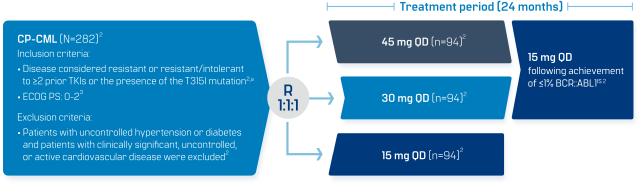
The 5-year data provide an update on the long-term efficacy and safety profile of ICLUSIG in this setting and aim to provide more robust data on the best approaches for managing these patients over an extended period of time.
aResistance in CP-CML while on a prior TKI therapy was defined as failure to achieve either a CHR (by 3 months), a minor cytogenic response (by 6 months), a major cytogenic response (by 12 months), or development of a new BCR::ABL1IS kinase domain mutation or new clonal evolution.
BCR::ABL1IS=BCR::ABL1 International Scale; CHR=complete hematologic response; CP-CML=chronic-phase chronic myeloid leukemia; ECOG PS=Eastern Cooperative Oncology Group performance status; QD=once daily; TKI=tyrosine kinase inhibitor.
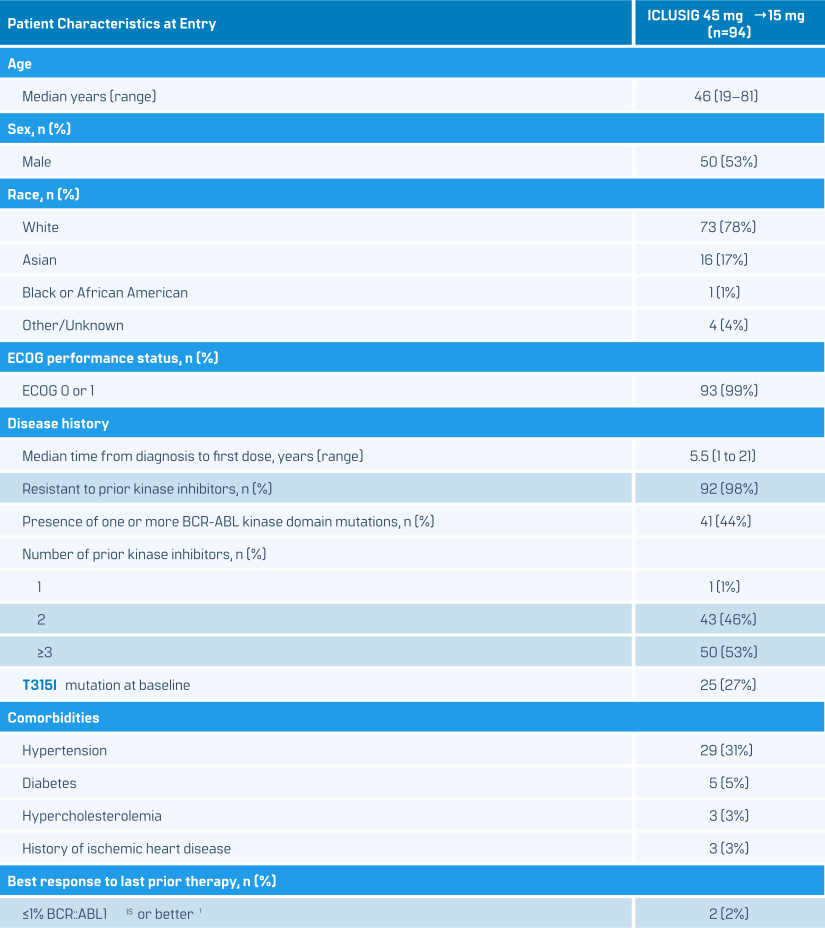
Patient characteristics reveal high TKI resistance and mutations
Demographic and disease characteristics in OPTIC1,2
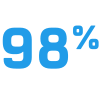
of participants were resistant to their prior therapy2
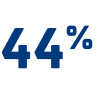
were heavily pretreated with TKIs2
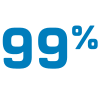
of participants had mutations in BCR::ABL12
Primary analysis: ICLUSIG achieved and maintained a clinically meaningful depth of response1
Results from OPTIC demonstrate a benefit in a highly resistant CP-CML population across dosing cohorts. However, optimal benefit: risk outcomes occurred in the cohort with a 45 mg starting dose that reduced to 15 mg upon achievement of ≤1% BCR::ABL1IS.1 The recommended starting dose is 45 mg orally once daily with a reduction to 15 mg orally once daily upon achievement of ≤1% BCR::ABL1IS. Patients with loss of response can re-escalate the dose of ICLUSIG to a previously tolerated dose of 30 mg or 45 mg orally once daily.2
Patients with ≤1% BCR::ABL1IS at 12 months (primary endpoint)2
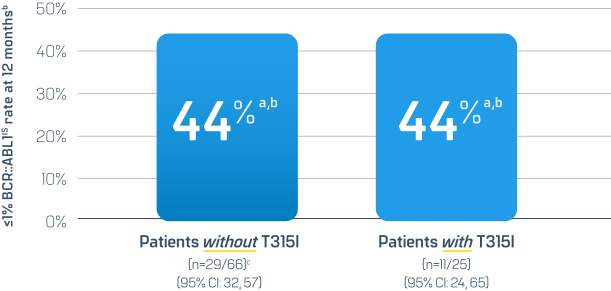
- Median duration of follow-up in the 45mg→15mg cohort was 27.0 months2
aITT population (N=93) defined as patients who had b2a2/b3a2 BCR::ABL1 transcripts.2
bThe primary endpoint was ≤1% BCR::ABL1IS rate at 12 months. Defined as a ≤1% ratio of BCR::ABL1 to ABL transcripts on the International Scale (ie, ≤1% BCR::ABL1IS); patients must have the b2a2/b3a2 (p210) transcript, in peripheral blood measured by qRT PCR.2
cOf the 93 patients, 2 did not have a baseline mutation assessment and were excluded from the response by mutation analysis.2
BCR::ABL1IS=BCR::ABL1 International Scale; CI=confidence interval; CP-CML = chronic-phase chronic myeloid leukemia; ITT=intent-to-treat; qRT-PCR = quantitative reverse transcription polymerase chain reaction; TKI=tyrosine kinase inhibitor
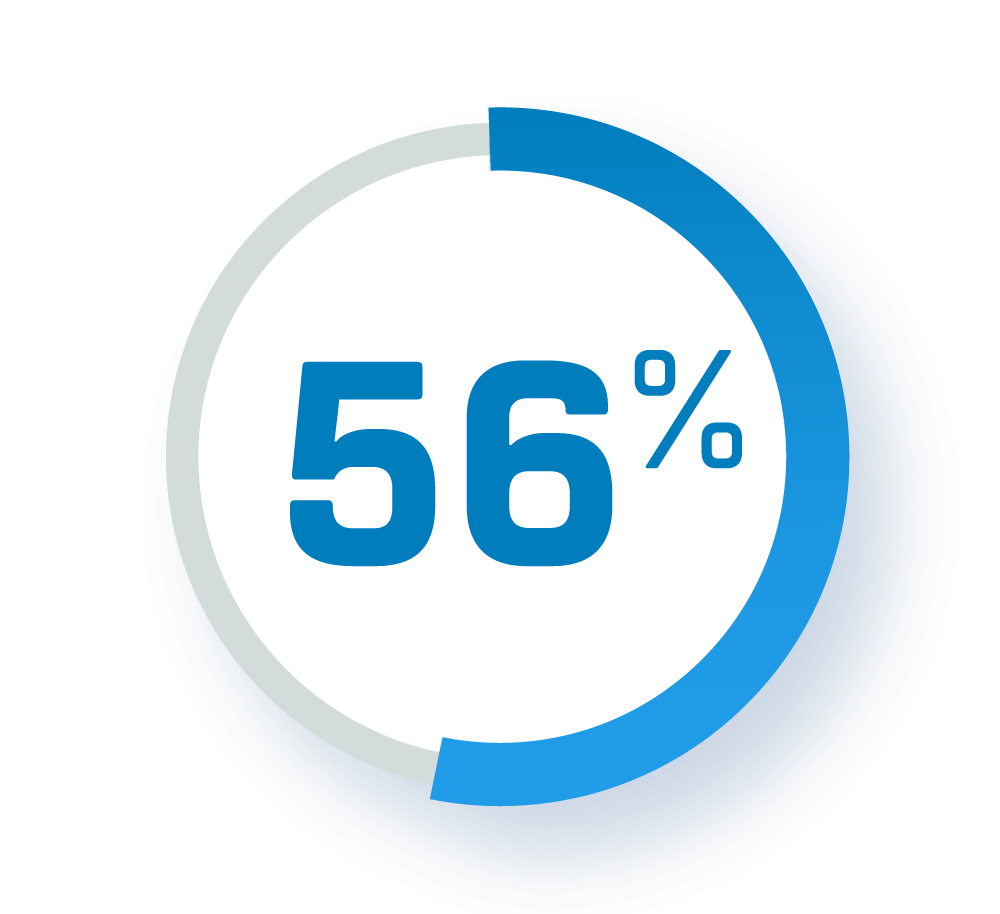
56% of patients (n=25/45)a maintained their response at a reduced dose of 15 mg for at least 1 year.
64% of these patients (n=16/25) maintained response for greater than 60 months.2
aPatients who achieved ≤1% BCR::ABL1 at any time.
More than half of patients had a response by 5 years in the 45 mg → 15 cohort2
Response of patients by 12 months and 60 months in the 45 mg→15 mg cohort receiving ICLUSIG following ≥2 prior TKIs
Percentage of patients who achieved 1% BCR::ABL1IS (%)
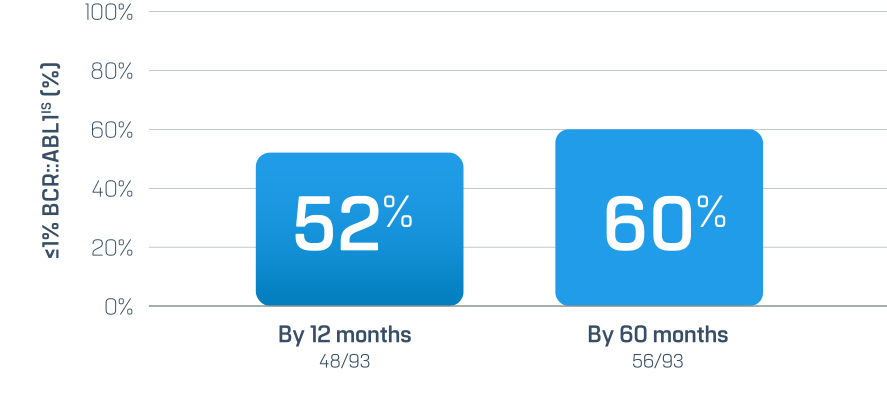
Median duration of follow-up for the 45 mg→15 mg cohort was 72.9 months (range: 0.5-106.3 months).
Study Limitations: The OPTIC 5-year follow-up analysis was a planned, exploratory, post hoc analysis. It was not powered to detect differences across subgroups. Results are presented descriptively.2
bAnalysis conducted in the intent-to-treat population.
cData cutoff date: May 15, 2024.
d29% of patients in the 45 mg→15 mg cohort remained on therapy, with a median follow-up of 78 months.
eThe number of patients with ≤1% BCR::ABL1IS was counted on a cumulative basis by each time point, and a patient with response was counted only once. Percentages are based on the number of patients in each cohort as the denominator.
BCR::ABL1IS=BCR::ABL1 International Scale; TKI=tyrosine kinase inhibitor
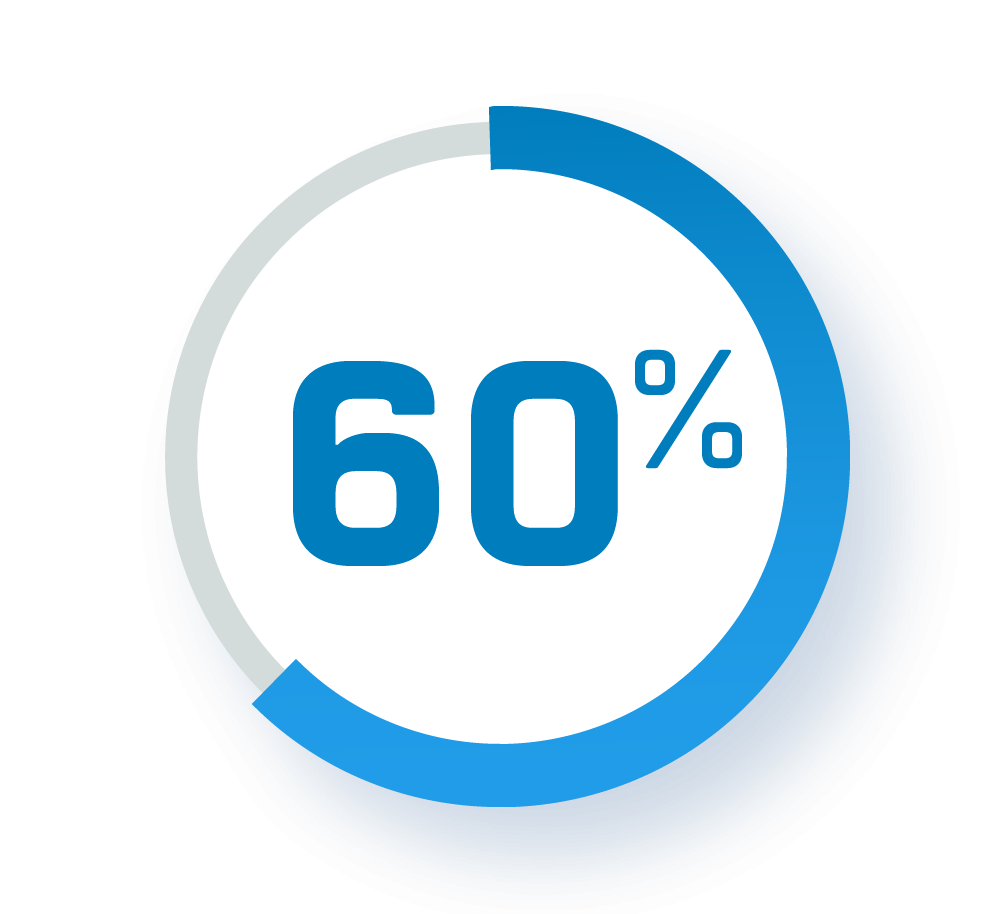
(56/93) of patients achieved 1% BCR::ABL1IS by 60 months3
In the 45 → 15 mg cohort, 52% (48/93) of patients achieved 1% BCR::ABL1IS by 12 months3
Deep, durable efficacy achieved with ICLUSIG
Long-term molecular response by 60 months in the 45 mg→15 mg cohort3
- As of the 5-year follow-up data cutoff, the median duration of ≤1% BCR::ABL1IS had not been reached
- In the 45 mg→15 mg cohort (n=93), 56 patients achieved ≤1% BCR::ABL1IS
- 45 of the 56 patients had a dose reduction to 15 mg after achieving response
- 68.9% (n=31) of these patients maintained their response at the time of the 5-year data follow-up cutoff
Depth of response: MMR, MR4, and MR4.5 by 60 monthsa,b
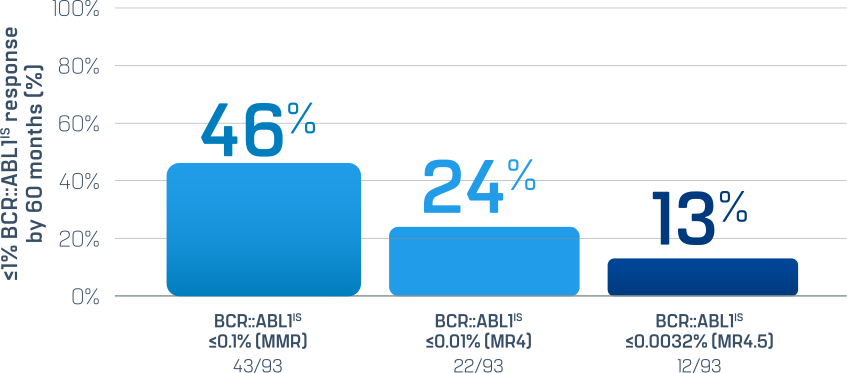
bAnalysis conducted in the intent-to-treat population.
BCR::ABL1IS=BCR::ABL1 International Scale; MMR=major molecular response; MR=molecular response.
If your patients with CML also have a T315I mutation:
- 64% of patients with T315I mutation achieved BCR::ABL1IS levels of 1% or less by 60 months2
- Ponatinib (ICLUSIG) is recommended as a treatment option by the National Comprehensive Cancer Network® (NCCN®) treatment guidelines for certain patients with T315I mutation4
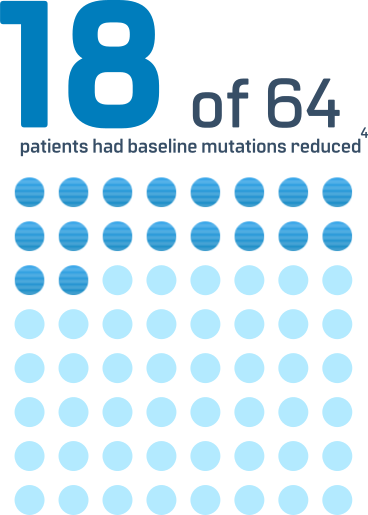
ICLUSIG may reduce detectable pre-existing mutations4
Based on exploratory post-hoc mutation analyses of 144 patients with baseline and end-of-treatment mutation data available from the OPTIC trial. Among 64 patients with ≥1 baseline BCR::ABL1 mutation, 18 patients had baseline mutations reduced below the level of detection and 14 distinct mutations were no longer detectable following ponatinib treatment.
Clinical significance has not been established. No formal statistical testing was conducted for this analysis. Results are presented descriptively.
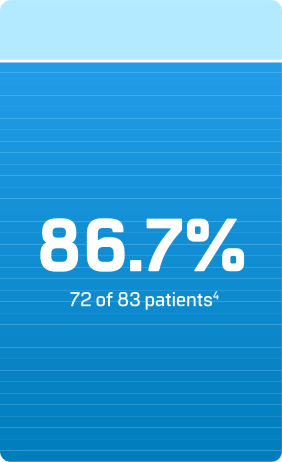
ICLUSIG may limit the emergence of new mutations4
Based on an exploratory post-hoc analysis of patients who discontinued treatment due to lack of efficacy or progressive disease and had mutation data available, 72 of 83 patients (86.7%) did not acquire new detectable BCR::ABL1 mutations during ponatinib therapy.
Clinical significance has not been established. No formal statistical testing was conducted for this analysis. Results are presented descriptively.


