
ICLUSIG (ponatinib) CML 5-year efficacy data
PACE TRIAL DATA
PACE trial design
In PACE, patients received a starting dose of ICLUSIG 45 mg orally once daily (N=449; n=270 CP-CML, n=85 AP-CML, n=62 BP-CML, n=32 Ph+ ALL).1,3
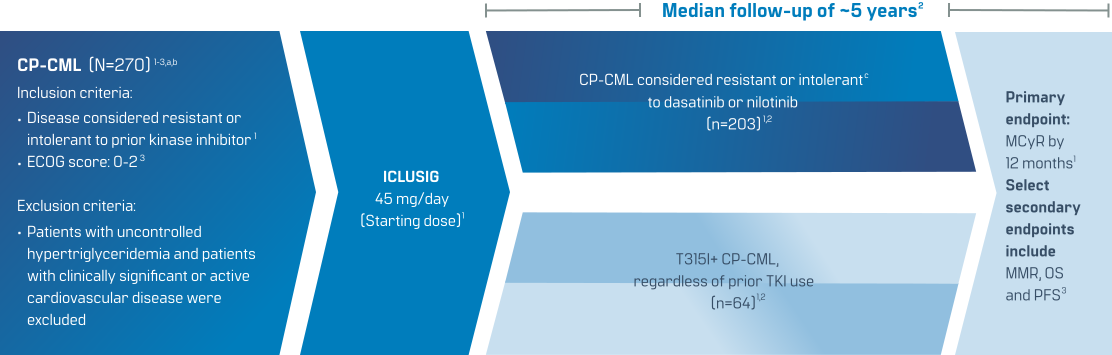
bDose reductions to 15 mg once daily or 30 mg once daily were applied to patients with and without MCyR, respectively, and were applied to manage AEs, or implemented proactively following an accumulation of AOEs.1,2
cResistance in CP-CML while on prior TKI therapy was defined as failure to achieve either a CHR (by 3 months), a minor cytogenetic response (by 6 months), or a MCyR (by 12 months). Patients with CP-CML who experienced a loss of response or development of a kinase domain mutation in the absence of a CCyR or progression to AP-CML or BP-CML at any time on prior TKI therapy were also considered resistant. Intolerance was defined as the discontinuation of prior TKI therapy due to toxicities despite optimal management in the absence of a CCyR in patients with CP-CML or MaHR for patients with AP-CML, BP-CML, or Ph+ ALL.1
Follow-up for trial at 40.5 months1
At study completion, the median duration of follow-up for the trial (all cohorts) was 40.5 months (range: 0.1 months to 79.5 months)1
Efficacy measure of MCyR by 12 months1,a
The major efficacy outcome measure (primary endpoint) for patients with chronic-phase chronic myeloid leukemia was MCyR by 12 months, which included CCyR and PCyR1,a
Dose reductions to manage
adverse reactions2,b
Dose reductions to 30 mg or 15 mg once daily were applied to manage adverse reactions, per protocol, or implemented proactively in 20132,b
b15 mg once daily for CP-CML patients with MCyR, and 30 mg once daily for CP-CML patients without MCyR, AP-CML, and BP-CML patients.2
Patient characteristics
Patients with CP-CML in the PACE trial had highly-resistant disease—80% of patients were resistant* to prior TKI therapy and 24% had at least one BCR::ABL1 mutation1,2
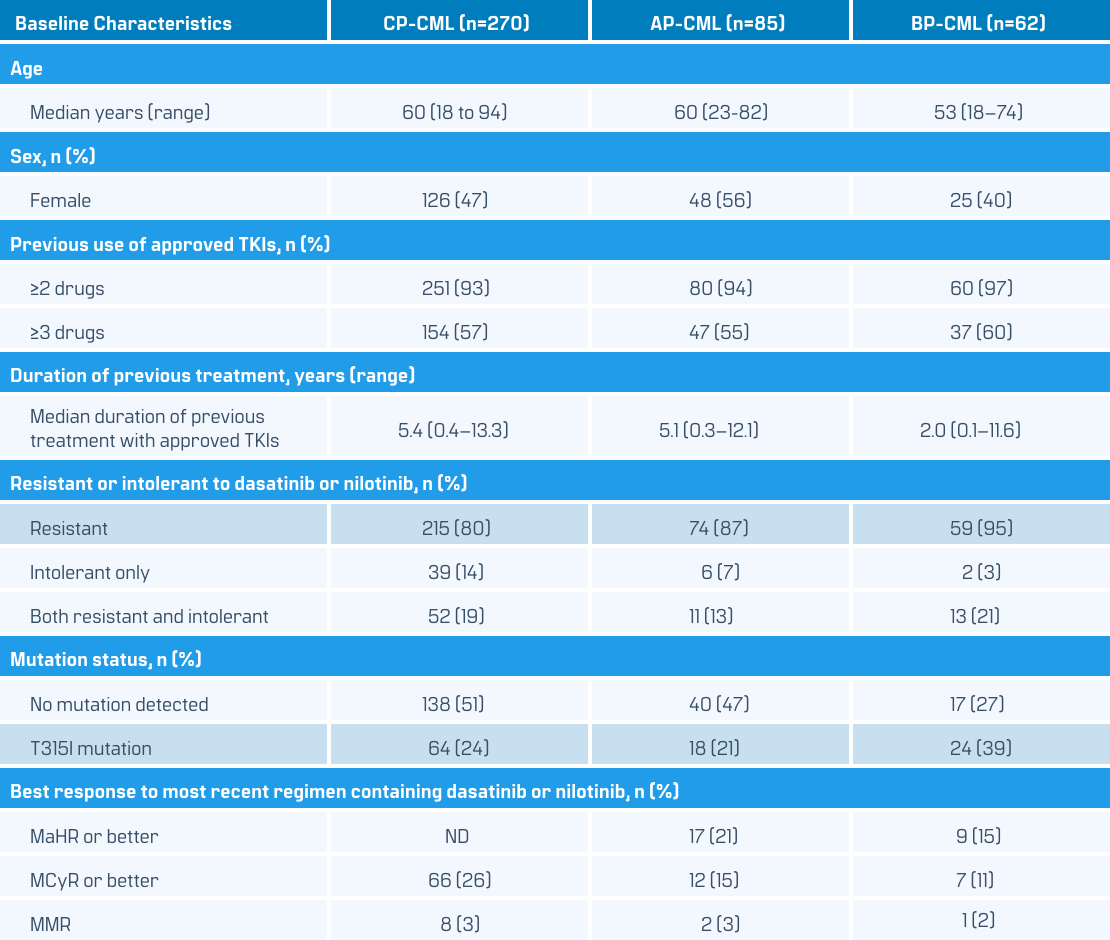
Response rate: At enrollment, few study patients had previously responded to a prior tyrosine kinase inhibitor³
Best response to any treatment prior to ICLUSIG2,a
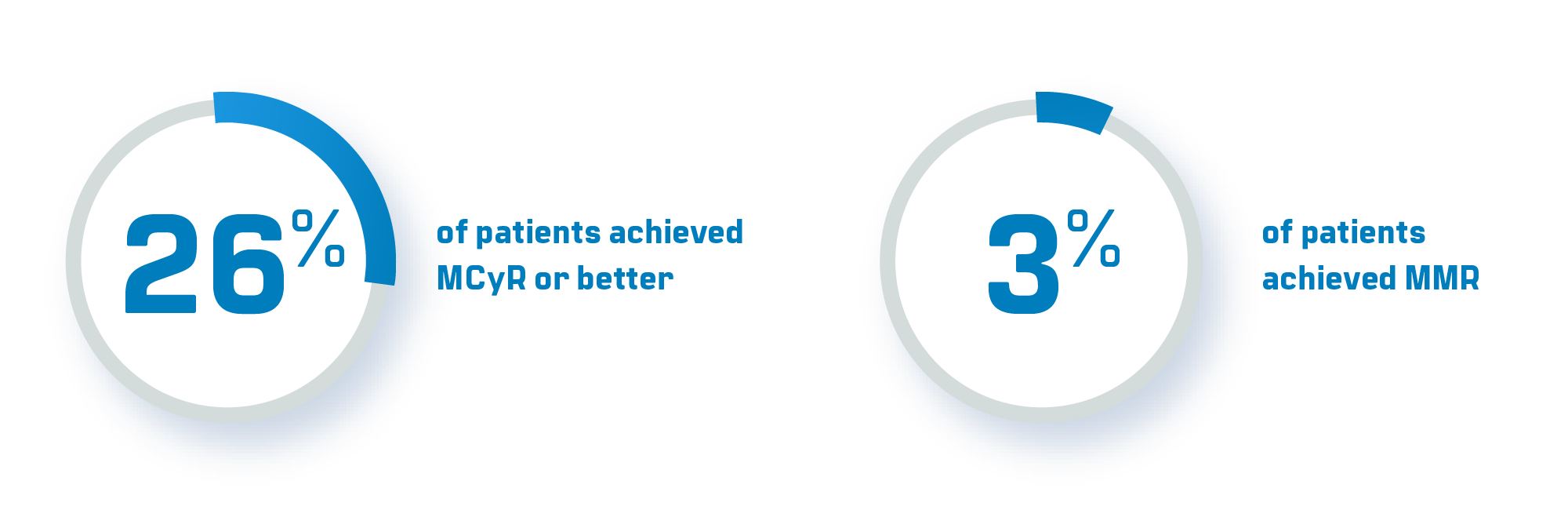
In PACE, TKI-resistant patients achieved deep, clinically significant responses and high rates of MMR¹
Proven long-term benefit in patients with TKI-resistant CP-CML (n=267)1
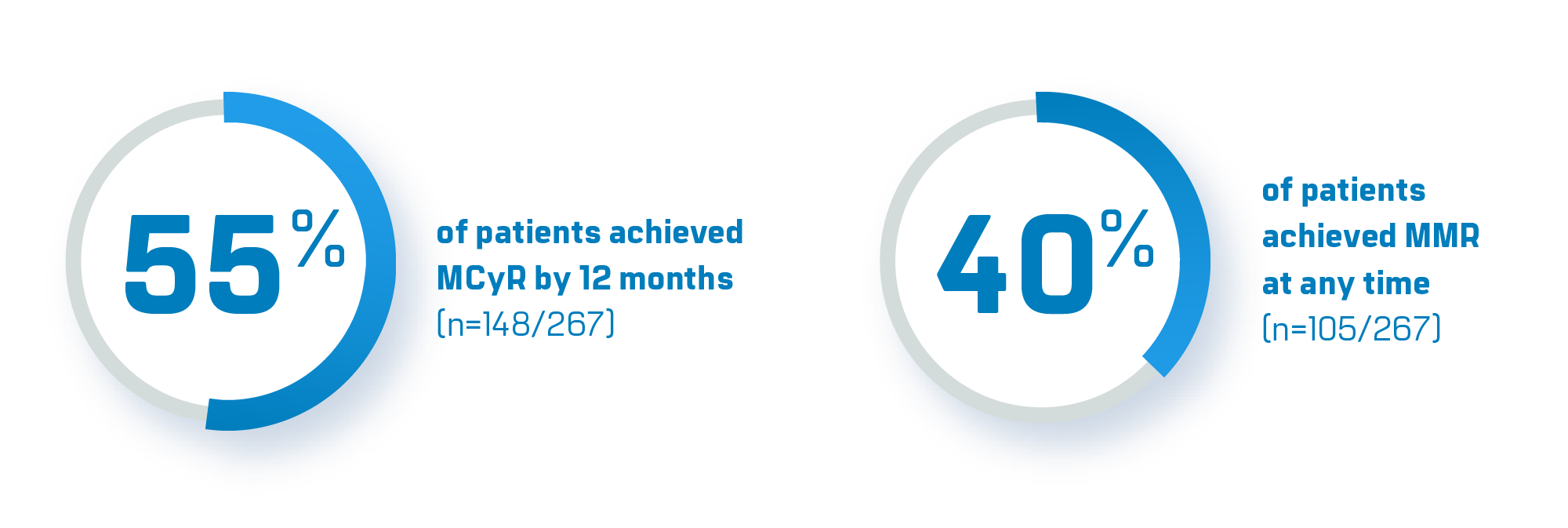
ICLUSIG achieved a deep and durable response over 5 years in patients with CP-CML, TKI resistance, and the T315I mutation¹
Achieved MCyR by 12 months %1
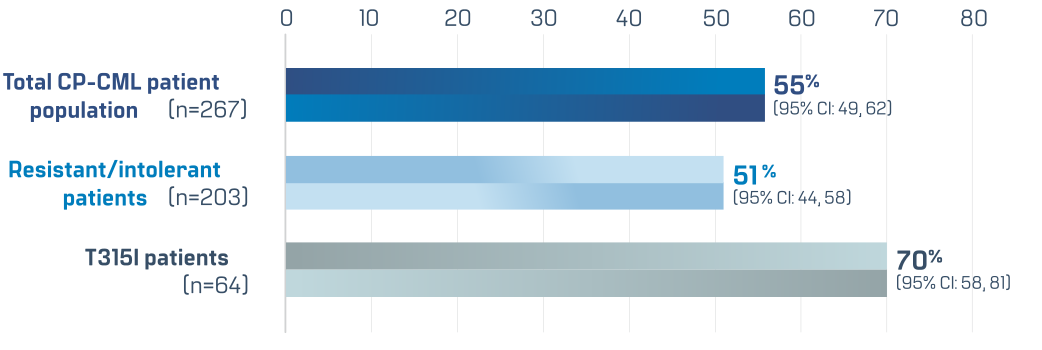
- Median duration of treatment for CP-CML patients was 35 months1
ICLUSIG demonstrated efficacy patients with AP- and BP-CML with resistant or intolerant advanced disease¹
Efficacy of ICLUSIG in patients with resistant or intolerant advanced disease (includes R/I and T315I cohorts) in PACE1
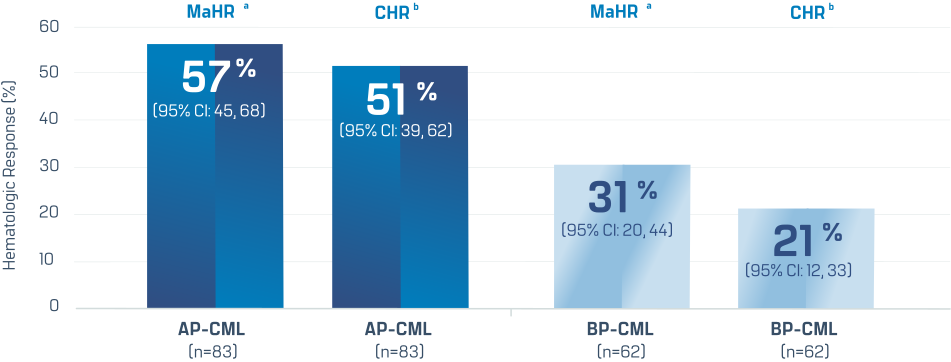
bCHR: WBC ≤ institutional ULN, ANC ≥1000/mm3, platelets ≥100,000/mm3, no blasts or promyelocytes in peripheral blood, bone marrow blasts ≤5%, <5% myelocytes plus metamyelocytes in peripheral blood, basophils <5% in peripheral blood, no extramedullary involvement (including no hepatomegaly or splenomegaly).1
Patients in PACE achieved and sustained responses¹
Median time to MaHR1
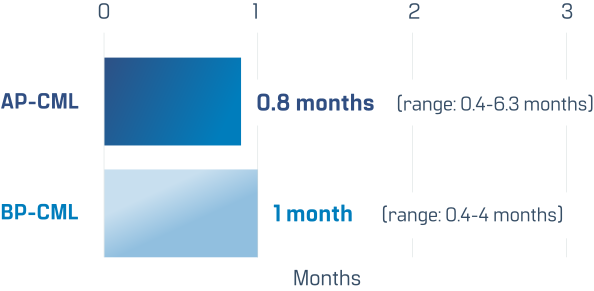
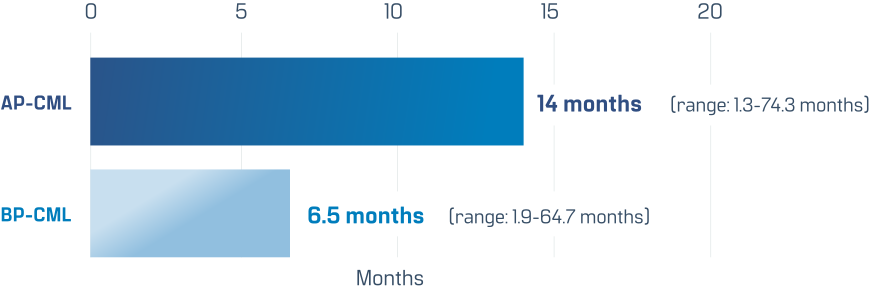
Median duration of MaHR1