
Safety profile of ICLUSIG (ponatinib) in the OPTIC trial
5-Year Follow-up Analysis: Safety Profile with an optimized dosing strategy1
Adverse reactions (≥10%) among patients who received ICLUSIG 45 mg → 15 mg (n=94)1
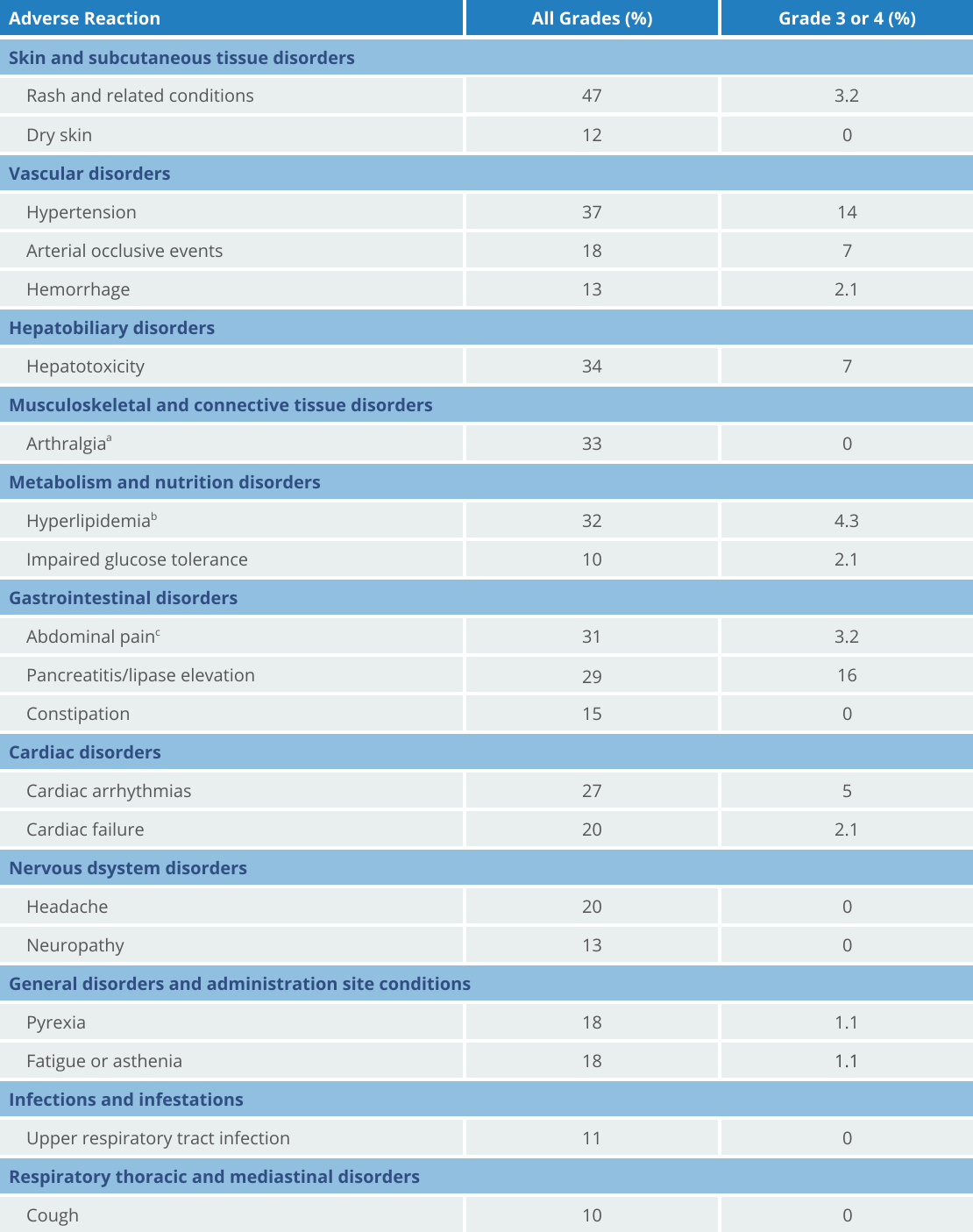
aArthralgia includes arthralgia, back pain, osteoarthritis, pain, neck pain, pain in extremity, spinal pain, tendonitis, bone pain, musculoskeletal pain, chondrocalcinosis, enthesopathy, pain in jaw.1
bHyperlipidemia includes blood cholesterol increased, blood triglycerides increased, dyslipidemia, hypercholesterolemia, hyperlipidemia, hypertriglyceridemia, low density lipoprotein increased.1
cAbdominal pain includes abdominal distension, abdominal pain, abdominal pain upper, chronic gastritis, duodenal ulcer, duodenitis, duodenogastric reflux, dyspepsia, gastric ulcer, gastritis, gastroenteritis, gastrointestinal pain, helicobacter gastritis, peptic ulcer.1
AOE=arterial occlusive event. CTCAE=Common Terminology Criteria for Adverse Events.
Serious Adverse Reactions1
Serious adverse reactions occurred in 40% of patients who received ICLUSIG at a starting dose of 45 mg. Serious adverse reactions in >2% of patients included AOEs (13%, of which 2.1% were sudden death), cardiac arrhythmias (9%, of which 2.1% were atrial fibrillation), thrombocytopenia (5%), pyrexia (4.3%), anemia (3.2%), abdominal pain (3.2%), pancreatitis/lipase elevation (2.1%), neutropenia (2.1%), hypertension (2.1%) and hepatotoxicity (2.1%). Fatal adverse reactions occurred in 4 patients (4.3%), including sudden death (2.1%), myocardial infarction (1.1%), and myocardial ischemia (1.1%).
Arterial Occlusive Events1
- 18% of patients experienced AOEs, of which 11%, 4.3%, and 3.2% experienced cardiovascular, cerebrovascular or peripheral vascular AOEs, respectively
- Grade 3 or 4 AOEs occurred in 7% of patients; the most frequent Grade 3 or 4 AOEs were myocardial infarction, acute coronary syndrome, arterial thrombosis, ischemic stroke, ischemic cerebral infarction, subclavian artery stenosis, and unstable angina (1.1% each)
- Fatal AOEs occurred in 4 patients (4.3%); including sudden death (2.1%), myocardial ischemia (1.1%), and myocardial infarction (1.1%).
Discontinuation Rates1
Permanent discontinuation of ICLUSIG due to an adverse reaction occurred in 24% of patients who received ICLUSIG at a starting dose of 45 mg. Adverse reactions which resulted in discontinuation in >2% of patients included AOEs, thrombocytopenia, hypertension, and sudden death.
5-Year Follow-Up Analysis: Optimized Dosing, Proven Safety Profile
ICLUSIG uses optimized dosing to help with dose modification upon clinical benefit1,2
By Year 5, safety results were consistent with those of the primary analysis of OPTIC
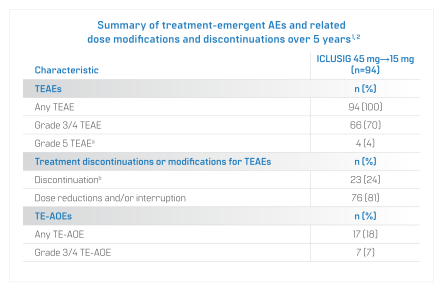
bAll treatment-emergent AEs with "drug withdrawn" as the action taken
AE=adverse event; TE-AOE=treatment-emergent arterial occlusive event; TEAE=treatment-emergent adverse event
- 7.4% (n=7) and 4.3% (n=4) of patients experienced Grade 3/4 TE-AOEs and Grade 5 TE-AOEs, respectively, after a median follow-up of 72.9 months
- 6.4% (n=8) and 21% (n=2) of patients experienced Grade 3/4 TE-AOEs and Grade 5 TE-AOEs, respectively, after a median follow-up of 27.0 months (primary analysis).
- An additional patient (1.1%) experienced Grade 3/4 TE-AOE and 2 additional patients (2.1%) experienced Grade 5 TE-AOEs as of the 5-year follow-up analysis